
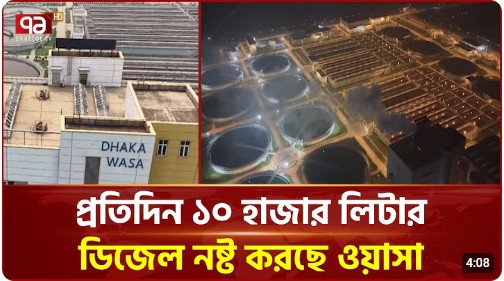
Dhaka WASA’s Dasherkandi Sewage Treatment Plant (DSTP) is reportedly burning about 10,000 liters of diesel every day, even as Bangladesh faces a severe fuel shortage. The plant is operating without the sewer connections it was built to serve.
At that rate, the plant uses around 300,000 liters of diesel a month. Since operations began, it has reportedly consumed around 10 million liters, worth about Tk 125 crore. That implies a price of roughly Tk 125 a liter, or about Tk 3.75 crore a month and around Tk 45 crore a year in diesel alone. Electricity adds another Tk 2.5 crore a month, or Tk 30 crore a year. Including fuel, electricity, chemicals, salaries and other expenses, Dhaka WASA reportedly spends around Tk 225 crore or 2.25 billion taka annually to keep the facility running. From next year, interest costs of nearly Tk 21 crore are expected to add to the burden. The plant earns no additional revenue from treatment.
The project began in 2017 on the outskirts of Aftabnagar, with a reported investment of around Tk 4,000 crore of 40 billion taka. It was meant to treat sewage from residential areas including Gulshan, Banani, Baridhara, Rampura and Moghbazar. However, the sewer network needed to carry household sewage to the plant was not completed before it began operating under then-Managing Director Taksim A. Khan.
As a result, the plant treats about 500 million liters of drainage water a day, rather than household sewage, and discharges it into nearby canals. Opportunities may exist to reuse some of this water, subject to quality testing and treatment standards.
Most of the diesel goes to sludge disposal. The plant reportedly generates around 300 tones of sludge daily, which diesel-powered incineration reduces to about 30 tones. The feasibility study for the sewer connection network has reportedly not yet begun.
Environmental lawyer Syed Mahbubul Alam Tahin said the scale of fuel use raises serious questions at a time of shortage. “The fuel could potentially be allocated to productive sectors, including agriculture, fishing and other essential activities that support food production,” he said.
The fuel shortage is already affecting agricultural machinery and fishing operations.
The central question, according to the investigation, is whether this large public investment is delivering the environmental, public-health and economic benefits it was designed to provide, and when the missing sewer infrastructure will finally be completed.
Report by Sushanta singha;
