
Sales of bidi, the hand-rolled cigarette, are rising in Bangladesh. Hundreds of child workers are employed in bidi factories across the country, with more than a hundred factories involved. Child labor in the tobacco industry is illegal, yet factories recruit children because their thin fingers make rolling bidis easier and because they can be paid very low wages. These children work in unhealthy environments and fall ill as a result. Tobacco control efforts in Bangladesh have done little to reach them, and bidi remains one of the most neglected areas of tobacco control.
It is my honor to share my research, Income versus expenditure: a vicious cycle of child workers at the bidi factories in Bangladesh, which I presented at the 12th Asia Pacific Conference on Tobacco or Health in Bali, Indonesia, in 2018.
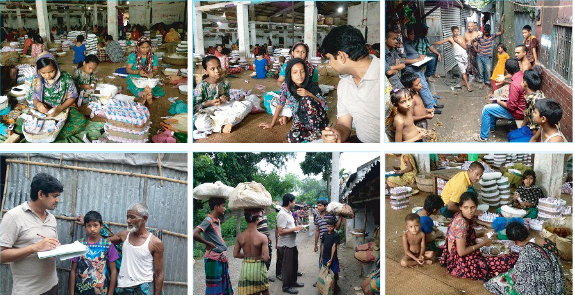
In this study, I examine how child workers fall ill from making bidis and how the cost of their treatment weighs against the small wages they earn. I interviewed 160 guardians and their working children in their homes, held group interviews with bidi workers, documented evidence from the factories, and reviewed existing research. The findings show a vicious cycle. Children working in bidi factories suffer from headaches, breathing problems, fever, chest pain and cough. Most families pay for this from their savings, and some take loans.
Because Bidi has received so little attention in Bangladesh’s tobacco control work, research on it is urgently needed. I hope this study supports stronger enforcement of the law and a specific policy to help these poor families move from hazardous tobacco work to safe work.
The 12th Asia Pacific Conference on Tobacco or Health
APACT 2018 | Scientific Research | AB-0336-ON
1.Sushanta Kumar Singha, Special Correspondent, Jamuna Television, 2.Aminul Islam Sujon, National Tobacco Control Cell (NTCC), Bangladesh
Background
Child labour in tobacco industry is illegal. In reality, Bidi (hand made locally produced cigarette) factories recruited child due to their thin fingers that useful to making Bidi easier and low wages. These child are working in the unhealthy environment and causes to various health problems.
Methods
Household interview of guardians and child labors, documented evidences from Bidi factories, group interviews at tea shops and reviewed of the existing research findings. A total 160 guardians and their children were interviewed those are working at the Bidi factories during study period. Four group interviews conduct in which around 25 Bidi workers were interviewed. Two senior Bidi labors were interviewed from eight different Bidi factories.
Results
Conclusion
Strong enforcement of law and policies, High Court order can be useful to protect these children from hazardous work. A specific policy is necessary to support these poor families to switch from hazardous tobacco factory to safe work.
