
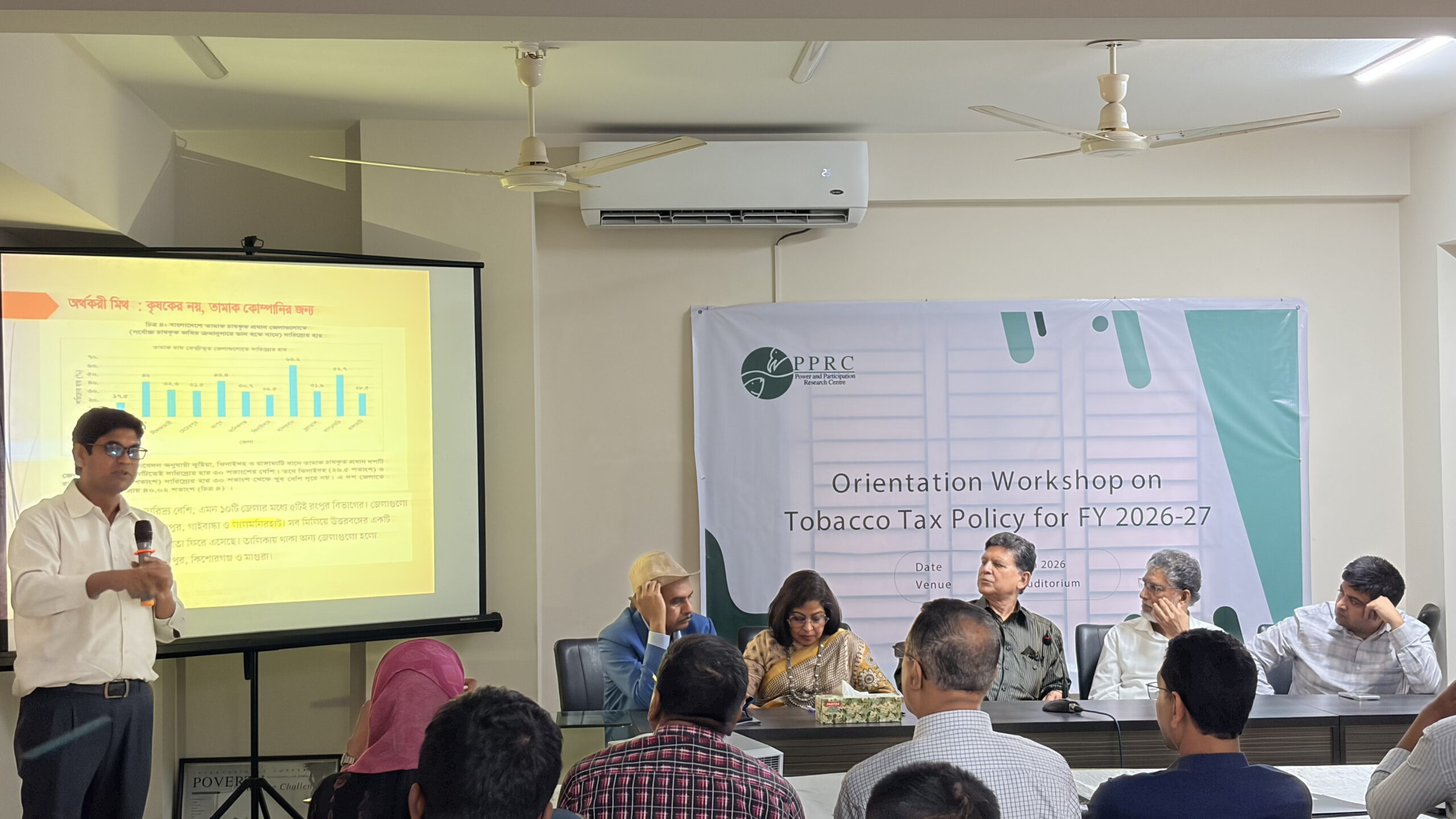
Being a tobacco control researcher and journalist, it was my honor and pleasure to join the orientation program as a panelist alongside three other experts. On 12 March, I participated in a panel discussion organized by PPRC for journalists and tobacco control advocates, where I highlighted how tobacco cultivation and tax evasion by the tobacco industry are closely linked to effective tobacco control in Bangladesh.
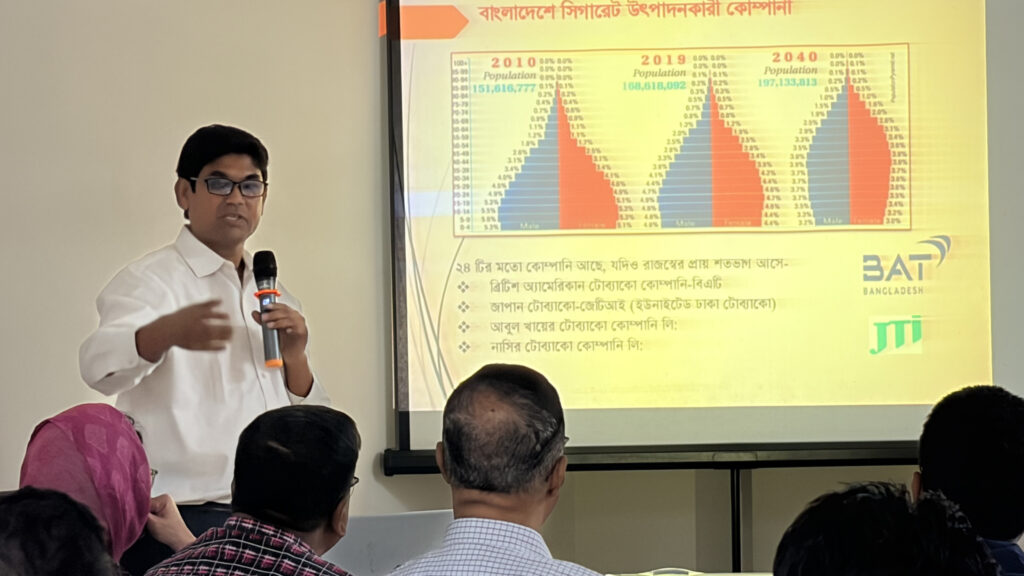
Economists and public health experts have urged the government to reform the price and tax structure of tobacco products to protect public health and address revenue shortfalls. “If properly implemented, these reforms could generate an additional Tk 44,000 crore in revenue while also reducing tobacco consumption,” they said. The call was made at an orientation workshop for journalists and tobacco control advocates held on Thursday at the Power and Participation Research Centre (PPRC) in Dhaka. Fifteen journalists from print, online news portals, and television attended the program. The workshop was jointly organized by Economics for Health, the World Health Organization (WHO), Campaign for Tobacco-Free Kids (CTFK), Vital Strategies, and the Institute of Health Economics (IHE) at the University of Dhaka.
Eminent economist, former adviser to the Caretaker Government, and PPRC Chairman Dr. Hossain Zillur Rahman emphasized, “Tobacco control should be part of a broader democratic policy process. It does not mean banning smokers or punishing them, but rather using policy tools like taxation, sales control, and advertising restrictions to ensure public welfare.” He added, “This is essentially a contest between narrow profit-driven interests and the broader public interest, and society must firmly stand on the side of public health.”
At the workshop, tobacco control researcher and Planning Editor of Ekattor Television, Sushanta K. Singha, said, “Bangladesh is not only among the top eight countries in the world for tobacco consumption, but also ranks 12th globally in tobacco cultivation. At the same time, cigarettes and tobacco leaves are comparatively cheaper in Bangladesh than anywhere else in the world.
“To control tobacco use, we must both increase tobacco taxes and regulate tobacco cultivation. After the 25 percent export duty on tobacco leaves was withdrawn in the 2018–19 fiscal year, tobacco cultivation in the country increased rapidly. According to the Department of Agricultural Marketing (DAM) under the Ministry of Agriculture, about 93,000 acres were under tobacco cultivation in 2022–23, which rose to nearly 142,000 acres in 2023–24.
Importantly, the government committee that sets tobacco leaf prices was amended in 2006 to include representatives from four tobacco companies. Originally, when the committee was formed in 1977, no company representatives were included. This is a clear conflict of interest. Therefore, company representatives should be removed from the committee, and the 25 percent export duty on tobacco leaves should be reinstated. This would increase government revenue and make it possible to control tobacco cultivation,” added Sushanta K. Singha.
“Currently, cigarettes in Bangladesh are subject to a multi-tiered and complex tax structure based on ad valorem calculations. To protect public health, it is also necessary to impose a specific tax, as is done in other countries. I propose that in the upcoming 2025–26 national budget, a specific tax of Tk 1 per cigarette stick be introduced. This could generate nearly Tk 7,000 crore in additional annual revenue, increase cigarette prices, and limit excessive profits by tobacco companies,” emphasized Sushanta K. Singha.
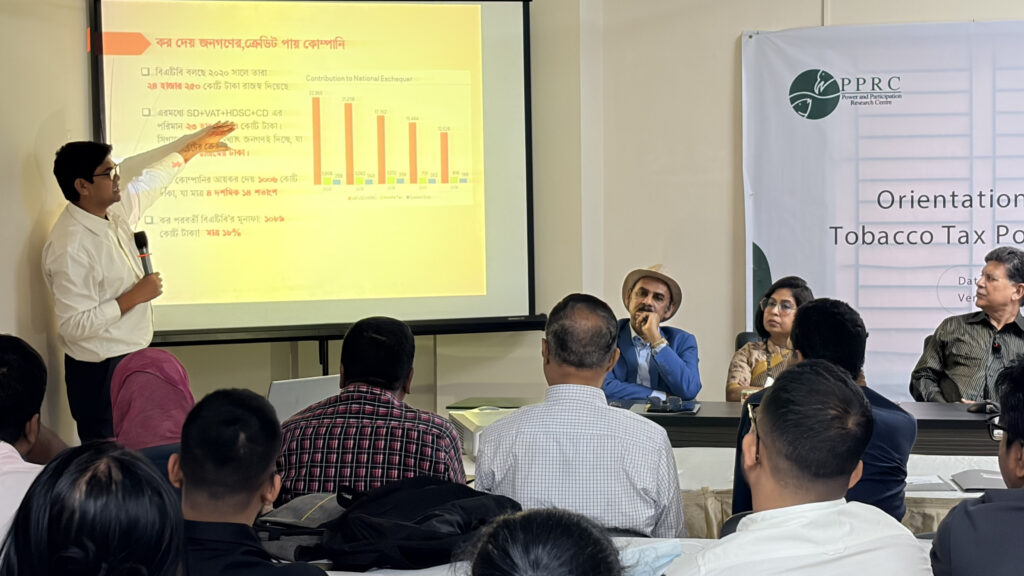
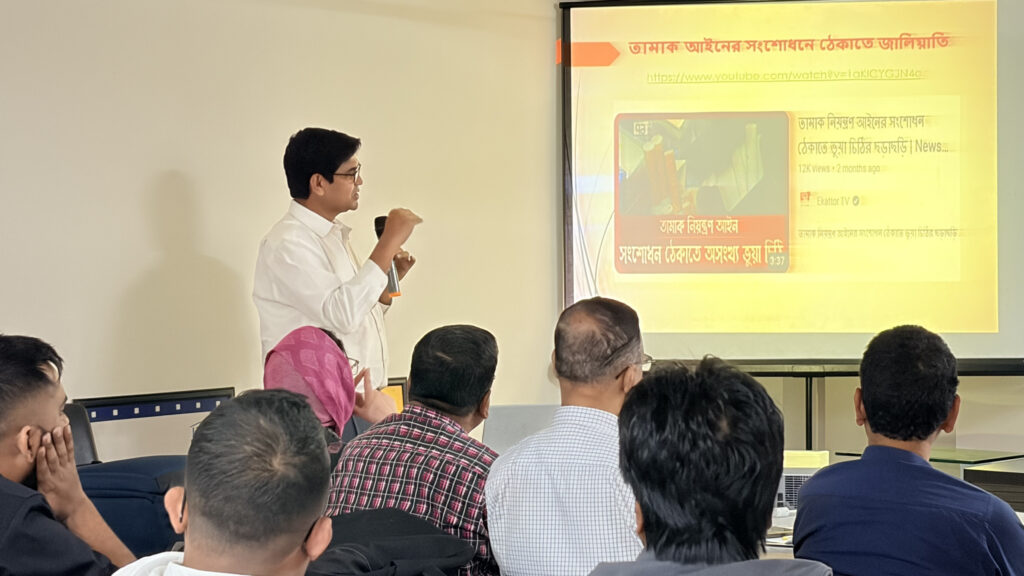
He further stressed, “It is crucial to ensure the implementation of the Maximum Retail Price (MRP) for cigarettes and other tobacco products. Companies currently violate the MRP and evade taxes. By enforcing the specific tax along with strict MRP implementation, the excessive profits of tobacco companies can be restrained. Tobacco control advocates must take a united stand to ensure sales follow the government-mandated MRP.”
Participants at the workshop noted that strengthening tobacco taxation is not only a revenue-generating measure but also a critical strategy to reduce tobacco consumption and improve public health.
