
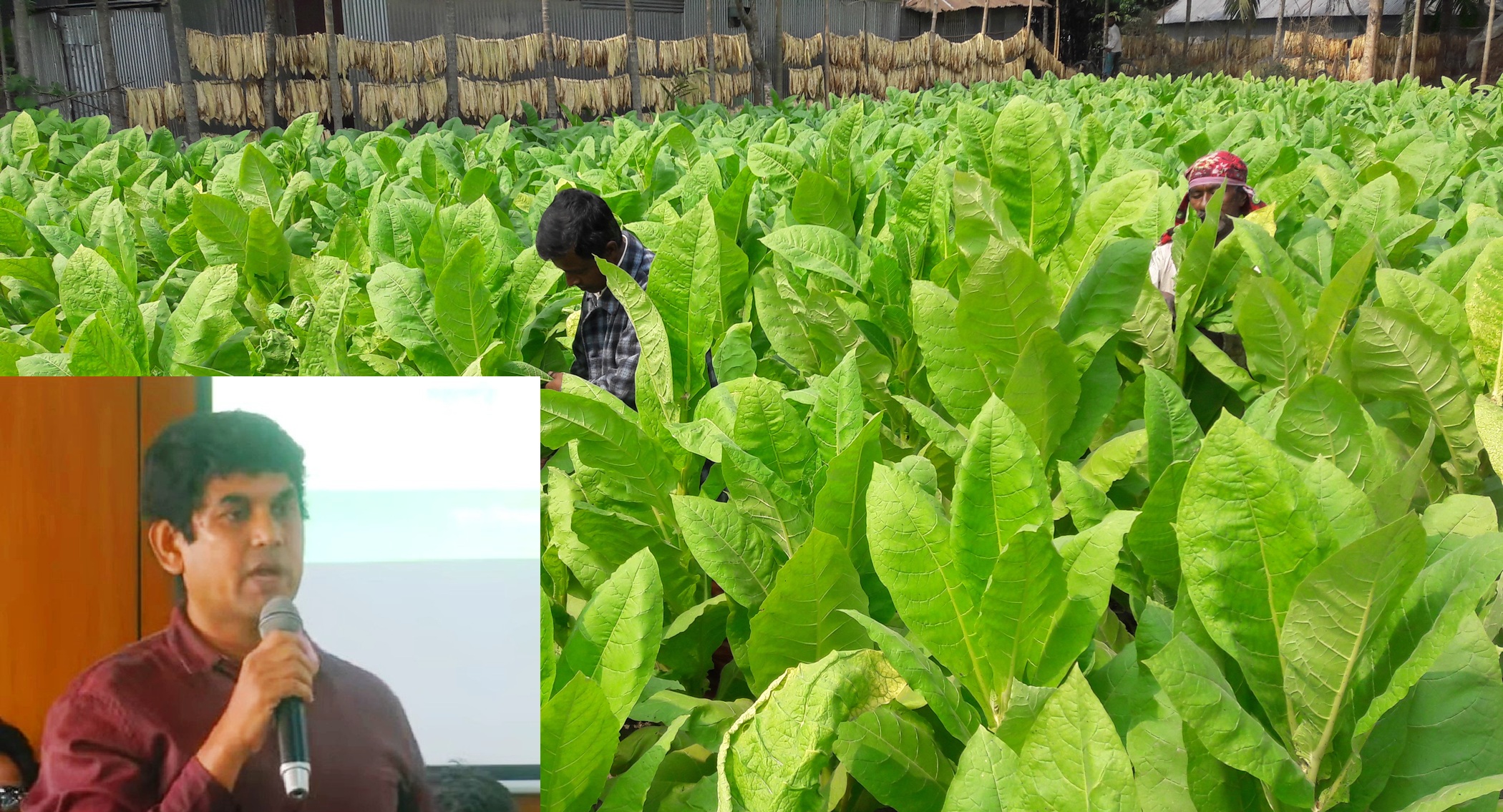
Bangladesh has pledged to become a tobacco-free country by 2040. However, the reality is that most discussions on tobacco control remain limited to increasing cigarette taxes, placing warning labels on packages, or conducting anti-smoking campaigns. Comparatively little attention is paid to tobacco cultivation, which is the very first stage of the tobacco supply chain. Yet without controlling tobacco farming, it will be difficult to achieve the goal of reducing the use of tobacco products.
Growing Expansion of Tobacco Cultivation and Food Security Risk
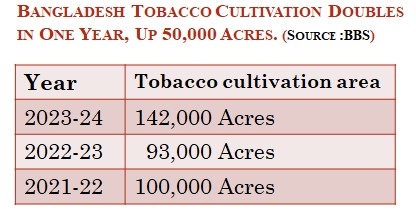
I raised this issue at a discussion organized on the occasion of World No Tobacco Day in 2023. Two years later, the concern has only grown. According to government data, compared with 2024, the amount of land used for tobacco cultivation in Bangladesh increased by nearly 50,000 acres in 2025, reaching approximately 142,000 acres. The expansion of tobacco cultivation onto land that is important for food production poses a major threat not only to public health but also to food security. In a country like Bangladesh, where ensuring food security for more than 170 million people is already a significant challenge and arable land is limited, this trend is deeply alarming. The expansion of tobacco cultivation could continue in the future unless effective policy measures are adopted. Yet the reality is that tobacco cultivation still does not receive adequate attention within the country’s tobacco-control programs.
Flawed Tobacco Leaf Pricing System and Farmer Exploitation
In particular, the current process for determining tobacco leaf prices is harmful to farmers. A government agency sets the price of tobacco leaves, but four tobacco companies have been strategically included in the price-setting committee. As a result, the very parties that purchase tobacco leaves are effectively involved in determining the price of the product they buy. In other words, buyers are deciding the price of the sellers’ product, which runs contrary to the fair interests of farmers.
Legal Structure and Industry Influence in Price Setting
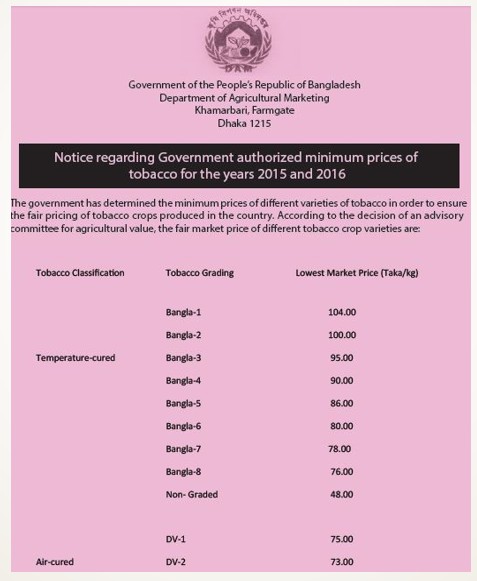
” On May 30, 2023, I stated: “There is an important legal obligation that must be addressed; otherwise, controlling tobacco cultivation in Bangladesh will remain extremely difficult. That obligation is that the Department of Agricultural Marketing officially sets the price of tobacco leaves every year, even though the government does not determine prices in this way for any other agricultural commodity.
Each year, the Department of Agricultural Marketing classifies tobacco leaves into different grades and sets prices accordingly. What is particularly unfortunate is that when the price-setting committee was formed in 1977, it included representatives from the Department of Agricultural Extension, the Bangladesh Agricultural Development Corporation (BADC), agricultural universities, and other agriculture-related government institutions. However, in 2006, the committee was revised to include four tobacco companies due to industry interference. These companies are British American Tobacco, Dhaka Tobacco, BLTC, and Nasir Tobacco.
Conflict of Interest in the Pricing Committee
At present, the 14-member committee responsible for determining tobacco leaf prices includes direct representation from tobacco companies as buyers. The question is: if the buyers themselves are part of the price-setting committee, how can farmers’ interests be protected? Consequently, tobacco continues to be regarded by the Ministry of Agriculture as a cash crop. While the ministry may speak of discouraging tobacco cultivation, it is unable to take a firm position on reducing or eliminating it. In my view, the current pricing structure is one of the major reasons behind this situation.
Tobacco Farming and Poverty Concentration
I would also like to mention another important issue. Eight of Bangladesh’s ten most poverty-prone districts have long been major tobacco-growing areas. In other words, tobacco cultivation is concentrated in some of the country’s poorest and most vulnerable regions. Therefore, tobacco farming is not merely an agricultural or economic issue; it is also closely linked to poverty, inequality, and development.
Health Risks for Farmers in Tobacco Cultivation
The health impacts of tobacco cultivation are equally important. A tobacco plant takes approximately three to four months to mature. During this period, farmers must repeatedly remove dry or dead leaves from the lower parts of the plant. This requires them to bend over frequently while working. Moreover, the pesticides and chemicals sprayed on tobacco plants are directly inhaled through the nose and mouth, exposing farmers to significant health risks. As a result, farmers themselves suffer from a range of health problems. The health consequences of tobacco cultivation deserve much greater attention.
Myth of “Registered Farmers” and Contract Farming Concerns
Another important issue concerns so-called “registered farmers.” It is often claimed that hundreds of thousands of farmers are involved in tobacco cultivation. However, in 2023, the number of farmers registered with tobacco companies was approximately 38,000. (That figure has now increased to nearly 60,000.) These farmers operate under contract-farming arrangements. The contracts, under which seeds, fertilizers, and other inputs are supplied, have also come under international scrutiny. Various organizations in Canada and the United Kingdom have expressed concerns regarding these arrangements.
Conclusion: Reframing Tobacco Control Beyond Consumption
Therefore, I believe that discussions on tobacco control must place tobacco cultivation at the center of the debate, rather than focusing solely on the consumption of tobacco products. The current system for determining tobacco leaf prices should be reconsidered. The role of the Department of Agricultural Marketing must be reformed, and the influence of vested interests should be removed from the price-setting process. Otherwise, the Ministry of Agriculture will never be able to take a firm and effective position in favor of reducing or eliminating tobacco cultivation, and the goal of a tobacco-free Bangladesh will remain out of reach.”
